


Table of Contents
- Why Exercise Matters When You Have Arthritis
- Low Impact Exercises for Arthritis
- Seated Exercises for Arthritis
- Benefits of Resistance Training for Arthritis
- Building Your Arthritis Exercise Routine
- Managing Pain and Flare-Ups During Exercise
- Recovery and Support Between Workouts
- Frequently Asked Questions
Last Updated: October 4, 2026
Why Exercise Matters When You Have Arthritis
Exercise with arthritis is one of the most effective ways to manage pain and improve quality of life. Research shows that staying active reduces inflammation, strengthens supporting muscles, and improves range of motion (pubmed.ncbi.nlm.nih.gov).
The key is choosing the right type of movement. According to the Arthritis Foundation's exercise guidelines, regular movement helps maintain joint flexibility and reduces pain over time.
Many people avoid exercise fearing it will worsen arthritis. The opposite is true: sedentary lifestyles lead to stiffness, weakness, and more pain. The right exercise routine is your best defense against arthritis progression.
Low Impact Exercises for Arthritis
Low-impact activities form the foundation of arthritis exercise programs, reducing joint load while building strength and endurance for daily life.
Walking and Water-Based Activities
Walking is one of the safest aerobic activities for arthritis. Start with short walks on flat surfaces and gradually increase distance. Aim for 20-30 minutes most days of the week.
Water-based activities are exceptional for arthritis management. The buoyancy reduces joint stress while allowing full range of motion, and the warmth promotes circulation and reduces stiffness.
Tai Chi and Flexibility Work
Tai chi combines slow, flowing movements with balance training, improving flexibility and body awareness without stressing joints. Gentle stretching and adapted yoga offer similar benefits, hold each stretch 15-30 seconds without bouncing, performed daily when muscles are warm.
Seated Exercises for Arthritis
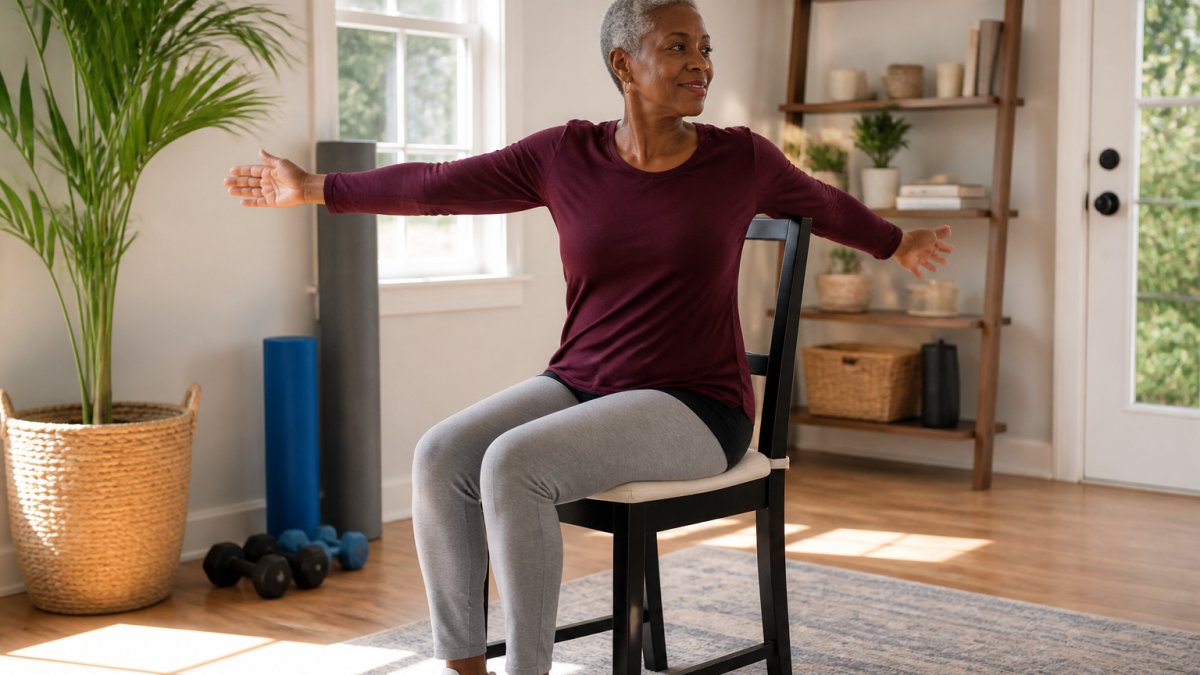
Seated exercises are ideal for limited mobility or home workouts, allowing full-body training for those recovering from physical therapy or with severe joint pain.
Upper Body Movements From a Chair
Arm circles strengthen shoulders and improve mobility. Sit upright, extend arms at shoulder height, and make small circles forward for 10-15 repetitions, then reverse.
Seated rows build back strength and posture.
Shoulder presses with light weights or water bottles build shoulder strength. Sit upright, press upward until arms are nearly straight, then lower back to shoulder height.
Grip and Hand Strength Training
Hand and grip strength decline with arthritis. A grip strengthener like the Grip Strengthener Spring Grip Finger Exerciser provides adjustable resistance. Finger flexion exercises (gentle fist, hold 2-3 seconds, straighten) and wrist circles (10 circles each direction) maintain dexterity and mobility.
Benefits of Resistance Training for Arthritis
Resistance training builds muscle strength, reducing joint stress. Stronger muscles act as shock absorbers.
Start with bodyweight exercises or light resistance.
Wall push-ups are safer than floor push-ups for arthritis. Stand facing a wall, place hands at shoulder height, lower toward the wall, and push back.
The Probar-Stretchbandplus from Health&Wellness is ideal for resistance training with arthritis.
Building Your Arthritis Exercise Routine
A sustainable routine includes low-impact aerobic activity, strength training, and flexibility work 3-5 days per week with rest days for recovery.
Warm-Up and Cool-Down Essentials
Warm up for 5-10 minutes with gentle movement like slow walking to increase synovial fluid and reduce stiffness. Cool down for 5-10 minutes with gentle movement and stretching (15-30 seconds per stretch) to prevent stiffness and allow heart rate to return to normal safely.
Starting Slowly and Progressing Safely
Start with 10-15 minutes of gentle activity and add 5 minutes weekly. Joint pain during exercise signals the need to reduce intensity or modify; muscle soreness 24-48 hours later is normal. After 2-3 weeks, increase repetitions or duration slightly for progressive overload.
Managing Pain and Flare-Ups During Exercise
Arthritis pain is unpredictable, making it difficult to know when to push through discomfort and when to modify or rest. Clear protocols help maintain consistency.
The Two-Question Framework for Daily Exercise Decisions
Before each workout, ask yourself two questions:
Question 1: Is this joint pain or muscle soreness? Joint pain is sharp, localized, and immediate, a warning signal to stop. Muscle soreness is a dull ache appearing 24-48 hours later and is normal. If joint pain occurs, switch to a different exercise or reduce intensity by 50%.
Question 2: Am I in a flare-up or remission? A flare-up is a period of increased inflammation, swelling, warmth, or pain lasting days or weeks. Remission is when your symptoms are stable or minimal. Your exercise intensity should shift based on this state.
Exercise Protocol During Remission (Stable Symptoms)
During remission, perform 3-5 sessions per week with 20-30 minutes of aerobic activity plus 2-3 sessions of gentle resistance and flexibility work. Progress by adding 1-2 repetitions or 5% more duration every 2-3 weeks. Use ice after exercise for inflammation or heat before for stiffness.
Electric Relaxing Knee Massager →
Exercise Protocol During Flare-Ups (Increased Symptoms)
During a flare-up, the goal is maintenance, not progress. Modify your routine as follows:
Reduce frequency: Drop from 5 sessions to 2-3 gentle sessions per week. This gives your joints more recovery time.
Reduce duration: Cut your aerobic activity from 20-30 minutes to 10-15 minutes. A 10-minute water walk is better than no movement.
Reduce intensity: Remove resistance training; focus on range-of-motion and flexibility work with 5-8 slow repetitions instead of 12. Prioritize water-based activity: Buoyancy reduces joint load by up to 50%. Increase recovery: Add an extra rest day between sessions. Apply heat before, ice after: Use moist heat 15 minutes before exercise and ice 15 minutes after if swelling occurs.
Pain Monitoring: The 2-Hour Rule
A practical way to gauge whether your exercise intensity is appropriate: your joints should not hurt more 2 hours after exercise than they did before.
Some people find that pain actually decreases during and after exercise due to endorphin release and improved joint lubrication. This is normal and positive. The key is that pain should not worsen in the hours following activity.
Psychological Barriers: Overcoming Kinesiophobia
Many develop kinesiophobia (fear of movement), but research shows appropriate exercise reduces pain and improves function. To overcome this: start with 5-minute walks or gentle arm circles, track pain before and 2 hours after exercise, celebrate consistency over intensity, and connect with support groups. The goal is building strength and confidence so pain doesn't control your life.
Recovery and Support Between Workouts
Recovery, when your body adapts to exercise stress, repairs tissue, and reduces inflammation, happens through sleep, nutrition, and active recovery. Without it, fatigue, joint stagnation, and overuse injury result.
Sleep and Inflammation Management
Sleep is essential for arthritis management. Aim for 7-9 hours nightly. Sleep on your back or side with pillow support, keep your bedroom at 65-68°F, do gentle stretching 1-2 hours before bed, and take a warm bath before sleep. If pain disrupts sleep, discuss pain management with your healthcare provider.
Anti-Inflammatory Nutrition for Exercise Recovery
Anti-inflammatory foods help resolve post-exercise inflammation efficiently, reducing soreness and supporting long-term joint health.
Prioritize these anti-inflammatory foods:
- Fatty fish (2-3 times per week): Salmon, mackerel, sardines, and trout are rich in omega-3 fatty acids, which reduce inflammatory markers in the blood. A 3-ounce serving provides 1,500-2,000 mg of omega-3s.
- Leafy greens (daily): Spinach, kale, and collard greens contain vitamins K and C, which support cartilage health. Aim for 1-2 cups per day.
- Berries (daily): Blueberries, strawberries, and raspberries contain anthocyanins, compounds that reduce inflammatory markers. A handful (about 1 cup) per day is ideal.
- Nuts and seeds: Almonds, walnuts, and flaxseeds provide omega-3s and vitamin E. A small handful (1 ounce) as a snack supports recovery.
- Turmeric and ginger: These spices contain curcumin and gingerol, which have mild anti-inflammatory effects. Add them to soups, rice, or tea.
Hydration: Drink at least 8-10 glasses of water per day. Proper hydration keeps synovial fluid (the lubricant in your joints) flowing, reducing stiffness and supporting nutrient delivery to joint tissue.
Post-exercise nutrition window: Within 30-60 minutes after exercise, eat a small meal or snack combining protein and carbohydrates. Examples:
- Greek yogurt with berries
- Grilled chicken with sweet potato
- Salmon with brown rice
- Protein smoothie with spinach and banana
This combination replenishes muscle glycogen and provides amino acids for tissue repair.
Home-Based Equipment Modifications for Range-of-Motion Work
You don't need expensive equipment to maintain and improve range of motion. Many household items can be adapted for effective exercises.
Towel rolls: Roll a hand towel tightly and use it for:
- Wrist support: Place under your wrist while doing arm circles to reduce strain on the wrist joint.
- Knee support: Place under your knee while seated to support the joint during leg lifts.
- Neck support: Roll and place behind your neck while doing gentle neck stretches.
Resistance alternatives:
- Resistance bands: If you don't have bands, use old pantyhose or elastic stockings tied together. They provide similar resistance at no cost.
- Water bottles: Fill plastic bottles with water (start with 1 pound, progress to 2-3 pounds) and use them as dumbbells for arm exercises.
- Canned goods: A 15-ounce can weighs about 1 pound. Use them for shoulder presses or bicep curls.
- Backpack with books: Fill a backpack with books to create adjustable resistance for weighted walking or squats.
Range-of-motion aids:
- Broomstick or dowel: Use a broomstick for shoulder mobility exercises. Hold it with both hands and slowly raise it overhead, then lower it behind your back. This improves shoulder range of motion without joint stress.
- Doorway: Use a doorway frame for gentle stretching. Place your forearm on the frame at shoulder height and lean forward to stretch your chest and shoulders.
- Wall: Use a wall for wall slides (slide your arms up and down the wall to improve shoulder mobility) and wall push-ups.
- Stairs: Use a low step or stair for balance training and gentle step-ups, which build leg strength without high impact.
Heat application at home:
- Warm shower: A 10-15 minute warm shower before exercise reduces stiffness. Focus warm water on stiff joints.
- Heating pad: Apply a heating pad (set to medium, not high) for 15 minutes before exercise. Wrap it in a towel to prevent burns.
- Warm compress: Soak a washcloth in warm water and apply to stiff joints.
- Warm bath: A 15-20 minute soak in warm (not hot) water before exercise is highly effective for reducing stiffness.
Active Recovery on Rest Days
Rest days include gentle movement to promote blood flow and reduce stiffness. Active recovery options: slow 10-15 minute walks, 5-10 minutes of light stretching, 15-20 minutes of tai chi or gentle yoga, or 10-15 minutes of water walking. Move without elevating heart rate to reduce next-day stiffness and maintain mobility.
Frequently Asked Questions
Can exercise actually improve arthritis symptoms?
Yes. Regular physical activity reduces stiffness, strengthens muscles around joints, and improves range-of-motion. Low-impact exercises maintain aerobic capacity without excessive joint stress. Many people with arthritis report reduced chronic pain and better mobility when they exercise consistently. The key is choosing activities that don't aggravate your joints and starting gradually.
What are the best low-impact exercises for arthritis?
Walking, swimming, aquatic therapy, tai chi, stationary cycling, and elliptical machines are excellent low-impact choices. These activities build endurance and flexibility while minimizing joint load. Seated exercises work well if standing is uncomfortable. Start with 10-15 minutes and increase gradually. Always warm up and cool down to protect your joints.
How often should someone with arthritis exercise?
Aim for 150 minutes of moderate physical activity per week, spread across multiple days. This could mean 30 minutes, five days a week. If you're new to exercise, start with 10-15 minutes three times weekly and build up. Rest days are important, they allow your joints to recover. Listen to your body and adjust intensity based on how you feel.
Is resistance training safe for arthritis?
Yes, when done correctly. Resistance training strengthens muscles that support and protect joints, reducing stress on cartilage. Start with light resistance or bodyweight exercises. Adjustable-resistance tools like portable bars allow you to control intensity precisely. Focus on controlled, slow movements with proper form. Always consult your doctor before starting a new resistance program.
Exercise with arthritis is entirely possible when you choose the right activities and progress sensibly. The Health&Wellness approach combines low-impact movements, seated exercises, and recovery support to help you build strength without pain. Our Probar-Stretchbandplus makes it simple to add resistance training to your routine, whether you're at home, in the office, or traveling. Start your arthritis exercise journey today with tools and guidance designed for your comfort and success.


